


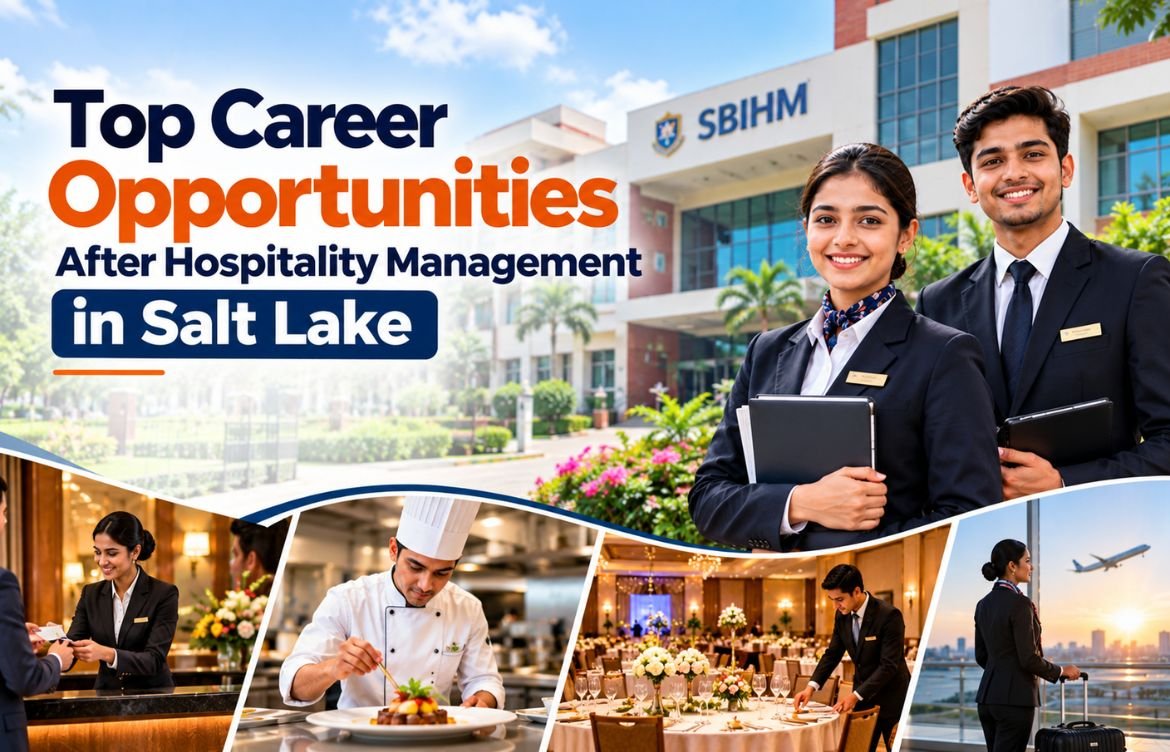
Top Career Opportunities After Hospitality Management in Salt Lake
Ask most students what hospitality means, and they’ll picture a hotel reception desk or someone serving tables. The industry’s actually a lot bigger than that. From luxury resorts and airlines to event venues, tourism businesses and corporate guest services, hospitality professionals turn up wherever customer experience and smooth operations matter. For students weighing up Hospitality Management in Salt Lake, getting a proper sense of this wider landscape makes choosing the right course a lot easier.
A well-built Hospitality Management programme brings together operational know-how, communication skills and real industry exposure, preparing students for a range of career paths while building the professional skills employers actually look for.
Hospitality Management Opens Doors Beyond Hotel Jobs
Hospitality Management, at its core, is about delivering good guest experiences while managing the people, services and operations behind them. Hotels are still a major employer here, sure, but what you learn through a hospitality programme carries across several service industries.
Students generally cover front office operations, food and beverage service, housekeeping, hospitality marketing, customer relations, communication, management and business operations. All of this works together to make sure guests get consistent, professional service every time.
Take a large corporate conference, for instance. Pulling that off takes a lot more than just booking a venue. Teams need to coordinate accommodation, catering, guest arrivals, event schedules and customer support throughout the whole programme. Hospitality professionals are the ones tying all of that together.
Career Paths in Hotels, Resorts and Guest Services
Hotels and resorts still offer some of the most recognisable career opportunities once you’ve finished a Hospitality Management course in Salt Lake. These places need skilled people across multiple departments to keep the guest experience running smoothly day after day.
Graduates often start out in areas such as:
- Front Office Operations
- Guest Relations
- Food and Beverage Service
- Housekeeping Operations
- Hotel Sales and Marketing
- Reservations and Customer Service
- Hotel Administration
These entry-level roles give graduates a real feel for how different departments work together. With experience, solid performance and more responsibility over time, professionals can move up into supervisory and management roles within whichever department they’ve chosen.
The hospitality sector rewards practical ability just as much as academic knowledge. Knowing how to work well with a team, manage your time properly and stay calm when things shift unexpectedly can genuinely shape long-term career growth.
Opportunities in Airlines, Cruises, Tourism and Events
Hospitality skills matter just as much outside traditional hotels. Plenty of organisations in travel and customer service look for graduates who understand service standards, communication and operational coordination.
Depending on the role and what the employer’s after, graduates may find opportunities in areas such as:
- Airport hospitality and passenger service
- Ground service operations
- Cruise hospitality services
- Travel agencies and tour operators
- Conference and convention centres
- Event management companies
- Destination management and tourism organisations
Whether you’re helping travellers at an airport, coordinating a business conference, or supporting guests on a cruise, the same core principles hold: professional communication, running things efficiently, and genuinely caring about the guest’s experience.
Skills That Help Hospitality Graduates Build Long-Term Careers
A Hospitality Management qualification isn’t just about learning operational procedures. Employers also care a lot about the professional skills that help teams deliver consistent service when things move fast.
Strong communication tops the list. Whether you’re welcoming guests, coordinating with colleagues or sorting out something unexpected, clear and respectful communication is what keeps service standards intact.
Problem-solving matters just as much. A delayed check-in, a last-minute change at an event, or an unusual guest request — these all call for quick thinking and practical decisions on the spot. Hospitality professionals are expected to stay calm and find a workable solution regardless.
Teamwork, time management, adaptability and how you present yourself professionally all play a part too. Hospitality operations involve several departments working in sync, so graduates who collaborate well tend to settle into workplace responsibilities with a lot more confidence.
Why Practical Training Matters in Hospitality Management in Salt Lake
Classroom knowledge lays the groundwork, but hospitality is really a profession you understand through doing it. Watching how a hotel, restaurant or hospitality business runs day to day helps students connect what they’ve studied with what actually happens on the job.
At Subhas Bose Institute of Hotel Management (SBIHM), the Bachelor Degree in Hospitality Management blends academic learning with industry-focused training. Verified features of the programme include:
- Three-year undergraduate Hospitality Management programme
- Six-month industrial training component
- Practical learning across key hospitality operations
- Curriculum covering areas such as front office, food production, food and beverage service, housekeeping, hospitality marketing and management
- Communication and personality development as part of professional preparation
- Domestic and international placement support
These features matter because they get students used to professional routines well before graduation. A longer stretch of industrial training helps learners genuinely understand operational discipline, guest interaction, teamwork and workplace expectations in real hospitality settings.
Choosing the Right Hospitality Management Institute
Picking a Hospitality Management course takes more than flipping through brochures or comparing facilities, what matters is how well an institute actually prepares you for professional life.
A well-rounded programme brings together hospitality operations, communication, management principles and practical training. Industry exposure counts just as much, letting students experience real professional standards before stepping into full-time work.
For Kolkata students, Salt Lake offers a well-connected educational hub, easy to reach from across the city, a practical base for higher education while staying close to Kolkata’s wider commercial scene.
SBIHM’s Hospitality Management programme reflects this through its structured curriculum, six-month industrial training and career-focused environment, pushing students to build operational knowledge alongside skills that carry across hospitality sectors.
Conclusion
Hospitality Management prepares students for a lot more than the traditional hotel career path. What you learn through the programme can open doors in hotels, resorts, food service, tourism, events, travel and other customer-focused industries. Alongside the technical grounding, communication, teamwork, professionalism and hands-on experience remain central to building a career that actually lasts.
Subhas Bose Institute of Hotel Management (SBIHM) offers a three-year Bachelor Degree in Hospitality Management course in Kolkata that combines academic study with practical learning, including a six-month industrial training component and placement support. This approach helps students build a broader understanding of hospitality operations while preparing them for a variety of professional paths.
FAQs
1. Is Hospitality Management only about hotel jobs?
No, not at all. Hospitality Management prepares graduates for careers across hotels, resorts, tourism, travel, food service, events, guest services and other customer-oriented industries.
2. What career opportunities are available after Hospitality Management?
Graduates may work in front office operations, food and beverage service, housekeeping, guest relations, hotel administration, tourism, event management, travel services, hospitality marketing and related operational roles. How far your career goes from there depends on experience, skills and what employers are looking for.
3. Can Hospitality Management graduates work in airlines or cruise hospitality?
Yes, graduates can often be eligible for hospitality-related roles within airlines, airports and cruise operations, wherever customer service and guest management skills come into play. Some specialised aviation roles may need extra qualifications or additional recruitment criteria, though.
4. Why is industrial training important in a Hospitality Management course?
Industrial training lets students experience real hospitality operations first-hand, build professional confidence, practise customer service, understand what a workplace actually expects, and apply what they’ve learned in class to a genuine industry setting. It strengthens career readiness, though it doesn’t guarantee a job on its own.